
Most of us spend our lives worrying about things we cannot control what people think of us, whether we succeed, what might happen tomorrow.
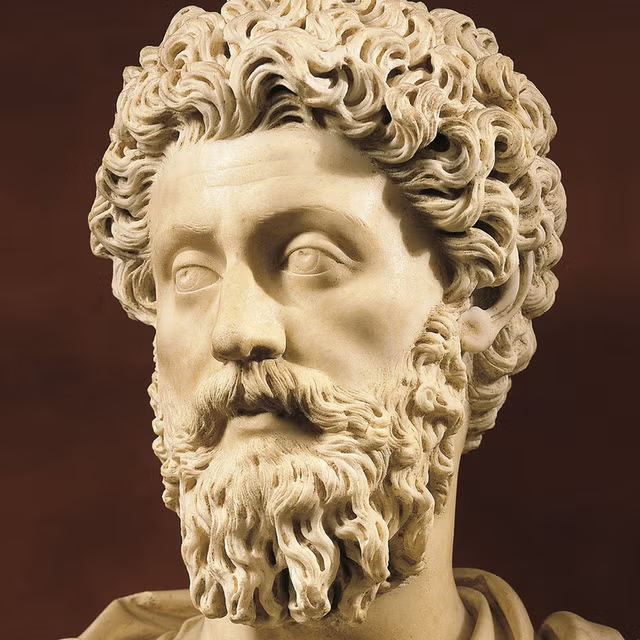
Nearly 2,000 years ago, a Roman emperor named Marcus Aurelius wrote that much of human suffering comes not from events themselves, but from our judgments about them.
That idea became one of the foundations of Stoicism.
What is Stoicism
Main points:
- Stoicism is a philosophy, not “hiding emotions.”
- It teaches control over reactions.
- It focuses on virtue, discipline, and perspective.
Stoicism is an ancient philosophy that was developed in Greece by Zeno who after losing his wealth in a shipwreck, studied under the Cynics and established a system focused on living in harmony with nature. Then a student of Zeno Cleanthes emphasized the Stoic belief in divine reason (logos) and cosmic order. And Chrysippus who furthered stoic logic.
Then the idea was popularised and expanded upon during the Roman Era with Seneca, a Roman statesman who adapted sotcism for practical use and emotional control. Furthered by Epictetus who was a slave Hierapolis, his lectures were recorded by his student Arrian. He is famous for pioneering the dichotomy of control.
Marcus Aurelius‘ book Meditations outlines more practical uses of Stocism and his personal diary of how he kept himself grounded in wisdom and duty to his people, rather than self intrest
At its core, Stoicism teaches a simple idea of:
We cannot control everything that happens to us but we can control our reaction and our emotions to an event.
An example of this is receiving criticism:
A Stoic approach to criticism usually looks like this:
- Pause before reacting.
- Ask whether the criticism is true.
- If true, improve yourself.
- If false, ignore it calmly.
- Do not let praise or blame control your peace of mind.
A simple Stoic mindset is:
“I cannot control what others say. I can control whether I act with wisdom and dignity.”
Marcus Aurelius often reminded himself not to take offense personally. In his book Meditations, he reflects on how people act from ignorance, emotion, or misunderstanding, so anger toward criticism is usually wasted energy.
What Can You Control?
Things you CAN control:
- your actions,
- your mindset,
- your effort,
- your character.
Things you CANNOT control:
- other people,
- the past,
- luck,
- public opinion.
Much of modern stress comes from trying to control uncontrollable things.
Stoicism argues that peace begins when we stop fighting reality.
Marcus Aurelius
Marcus Aurelius was fascinating as when he was writing the diaries that fomed his book meditations he wasnt just writing from a peaceful monastrey.
He wrote while he was ruling the Roman empire during the parthian war and a time of political instability, yet through this time he remained calm, disciplined and humble through stoic teachings
“You have power over your mind — not outside events. Realize this, and you will find strength.”
— Marcus Aurelius
My interpretation of this quote is that the universe as a whole is unpredictable by nature and trying to exert control over external events would waste your energy. For example you cannot control thoughts of strangers or what they say. However you have the power to control how you view those comments and what you learn from that comment and how you grow.
Conclusion
Stoicism does not promise a perfect life.
It does not remove pain, uncertainty, or difficulty.
Instead, it teaches that a good life comes from developing inner stability in a world we cannot fully control.
Maybe that is why these ideas still resonate thousands of years later.
What would change if you focused only on what you could control?